Thinking about a Big Bear Lake cabin means you are probably picturing two things at once: your own mountain escape and the possibility of earning income when you are not using it. That mix is exactly what makes Big Bear Lake so appealing, but it also means you need to look at the market with clear eyes. If you want to know whether a cabin in 92315 makes more sense as a vacation rental, a personal getaway, or a little of both, this guide will walk you through the key factors that matter most. Let’s dive in.
Why Big Bear Lake Fits Both Goals
Big Bear Lake stands out because it works as a four-season destination. Visitors come for snow sports, fishing, hiking, mountain biking, lake days, and year-round events, and Big Bear Mountain Resort describes the area as a year-round alpine destination.
That matters if you are buying with flexibility in mind. A cabin here can support your own weekend plans while also appealing to travelers in different seasons, which is not always true in more single-season markets.
What Demand Really Looks Like
Big Bear Lake has a well-established vacation rental market, but demand is not perfectly even all year. According to the city, there were about 2,600 licensed vacation rentals, and a city analysis found that from October 2020 to October 2021 about 78% of licensed rentals were booked less than 180 days, while about 48% were booked less than 90 days, based on city discussion of vacation rental activity.
The takeaway is simple: income potential exists, but you should not assume constant occupancy. If you are buying for rental use, it helps to think of the property as a lifestyle asset with income potential, not guaranteed full-time booking.
Best Cabin Features for Rentals
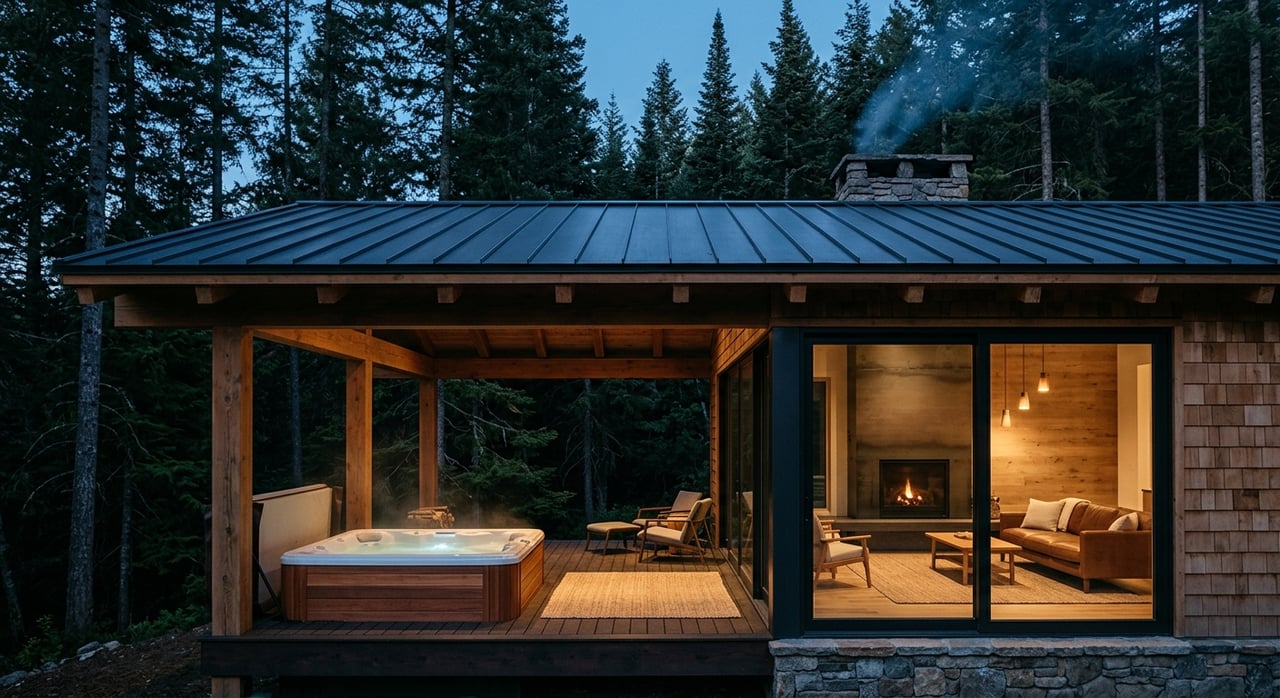
If you want a cabin to perform well as a short-term rental, amenities matter a lot in Big Bear Lake. Official tourism listings repeatedly highlight features such as private hot tubs or spas, fireplaces, Wi-Fi, pet-friendly policies, game rooms, EV chargers, decks, and lake or mountain views, as shown across current Big Bear tourism cabin listings.
In practical terms, guests are often comparing one cozy mountain stay against many others. A cabin that feels guest-ready from the start usually has a better shot at standing out than one that depends only on square footage.
Amenities Guests Commonly Expect
- Hot tub or spa
- Fireplace
- Reliable Wi-Fi
- Pet-friendly setup
- Deck or outdoor sitting area
- Easy parking
- Game room or bonus entertainment space
- Lake, mountain, or slope access advantage
You do not need every feature on the list, but the market is clearly amenity-forward. If your goal is to rent the cabin part-time, those details can shape both guest interest and long-term marketing appeal.
Why Location Inside Big Bear Matters
In Big Bear Lake, location is not just about scenery. It also affects how easy your cabin may be to market to guests who want quick access to the lake, the Village, or mountain recreation.
Tourism pages strongly emphasize lake activities and resort access, including lake information and recreation details. Based on the way the destination is promoted, cabins near the lake, the Village, or major mountain corridors may be easier to position for short-term guests than similar homes farther away.
Lake Access Comes With Extra Responsibilities
Lake access is attractive, but it also adds rules and planning. The Big Bear Municipal Water District outlines lake use permit fees and lake rules, including guidance for boating, fishing, and watersports, and it notes that swimming is at your own risk with no lifeguards.
If you are buying for personal use, those rules shape how you enjoy the property. If you are buying with rental plans, they also affect how you set guest expectations and communicate safe use.
Vacation Rental Rules in 92315
If the property is inside Big Bear Lake city limits, the city vacation rental program applies to ZIP code 92315. Properties outside the city must register with San Bernardino County instead, according to the city’s transient private home rental program information.
Inside city limits, owners must follow licensing and compliance requirements. The city requires annual registration, proof of ownership, liability insurance, and a $605 registration fee, along with annual renewal.
Key Rules to Know
The city’s vacation rental materials also require:
- Posted occupancy limits
- Posted vehicle limits
- A 24/7 local contact number
- Compliance with the Good Neighbor Policy
- Smoke and carbon monoxide detectors
- One parking space per bedroom
- No street parking for guests
- Spa use only outside 10 p.m. to 7 a.m.
- No amplified music audible at the property line
- No woodburning fire pits
These standards are outlined in the city’s tourism management checklist.
This is where many buyers need a mindset shift. Owning a cabin as a vacation rental is not just about decorating it well. It also means running a property that can stay compliant during busy weekends, holidays, and winter weather.
Winter Parking Can Make or Break Use
Parking is one of the easiest details to underestimate in Big Bear Lake. The city states that there is no parking on city streets between October 15 and April 15 when snow conditions exist, and vacation rental guests are never allowed to park on the street at any time, based on the city’s seasonal street parking notice.
For a personal getaway cabin, limited parking can be inconvenient. For a vacation rental, it can become a serious operational issue, especially if the home does not have enough off-street parking to match guest expectations.
The Costs Buyers Often Underestimate
A Big Bear Lake cabin can be emotionally appealing, but ownership costs deserve just as much attention as the view. The city defines short-term stays as fewer than 28 days and says they are subject to 10% TOT plus 3% BBLTBID, for a combined 13% of gross receipts, according to the city’s TOT and TBID tax guidance.
The city also says owners must file monthly even when there was no rental income, and taxable charges can include booking, cleaning, management, pet, linen, spa, maid, administration, and utility-related fees. That makes bookkeeping and oversight a bigger part of ownership than many first-time cabin buyers expect.
Common Costs to Budget For
- Annual city registration fee
- Liability insurance
- TOT and TBID taxes
- Cleaning and turnover expenses
- Property management or local support
- Snow-related maintenance and access issues
- Compliance monitoring and guest communication
If you are weighing a cabin as a getaway first, these costs may still matter even with light rental use. If you are buying for income, they should be part of your numbers from day one.
Getaway First vs Rental First
A getaway-first cabin gives you more privacy, more control, and fewer moving parts. You can keep the property ready for your own use, reduce wear and tear, and avoid some of the stress that comes with guest turnover.
That said, a personal-use cabin still comes with carrying costs, seasonal maintenance, and periods when the home may sit unused. For some owners, occasional rental use helps offset those costs without turning the property into a full-time investment.
Can You Do Both?
Yes, one cabin can serve as both a personal getaway and a rental, as long as it fits the city or county program and follows the applicable rules. The city also offers a home-share option for owners who live in the home during all rentals, which appears in the city’s registration and home-share application.
This hybrid approach often works best when the property has:
- Strong appeal in both winter and summer
- Enough legal parking
- A practical layout for occupancy limits
- Features guests actively look for
- A plan for local oversight and compliance
The Biggest Risk to Watch
For buyers focused on income, the biggest risk is not just seasonality. It is also regulation and management complexity. The city is currently seeking stakeholder feedback on its vacation rental ordinance through its vacation rental ordinance review process, and a separate citizen initiative has been proposed that would cap future licenses and rental contracts.
Even if current rules remain in place or evolve over time, that public review process shows that short-term rental ownership in Big Bear Lake is not a set-it-and-forget-it decision. You need to be comfortable with active rules, possible updates, and a market where compliance matters.
How to Think About the Right Cabin
The best Big Bear Lake cabin for you depends on what role you want the property to play in your life. If you care most about your own weekends in the mountains, focus on comfort, access, and ease of ownership. If you want to offset costs through rentals, look closely at amenities, parking, licensing requirements, and how well the home fits guest demand.
In many cases, the strongest option is a cabin that can do both reasonably well. In Big Bear Lake, that often means a property with year-round appeal, easy access to local attractions, and enough practical features to support both personal use and responsible rental use.
If you are exploring Big Bear Lake cabins and want local guidance on how a property may fit your lifestyle goals, rental plans, or resale strategy, Angie & Daniel Dominguez can help you weigh the details and find the right fit with a personalized, relationship-first approach.
FAQs
Can a Big Bear Lake cabin in 92315 be both a personal getaway and a vacation rental?
- Yes, if the property complies with the applicable city or county program and you follow the required licensing, tax, parking, and occupancy rules.
What amenities matter most for a Big Bear Lake vacation rental?
- Official tourism listings commonly feature hot tubs, fireplaces, Wi-Fi, pet-friendly policies, decks, game rooms, and convenient access to the lake or slopes.
What taxes apply to short-term rentals in Big Bear Lake?
- The city says short-term stays of less than 28 days are subject to 10% TOT plus 3% BBLTBID, for a combined 13% of gross receipts.
What Big Bear Lake cabin costs are easy to overlook?
- Buyers often underestimate the annual registration fee, liability insurance, monthly tax filing, cleaning, management, snow-related access issues, and compliance-related costs.
Why is parking such a big issue for Big Bear Lake vacation rentals?
- City rules require off-street parking, prohibit guest street parking at any time, and add winter restrictions between October 15 and April 15 when snow conditions exist.
Are Big Bear Lake vacation rental rules changing?
- The city is actively reviewing its vacation rental ordinance, and a separate citizen initiative has been proposed, so owners should expect the regulatory environment to remain active.